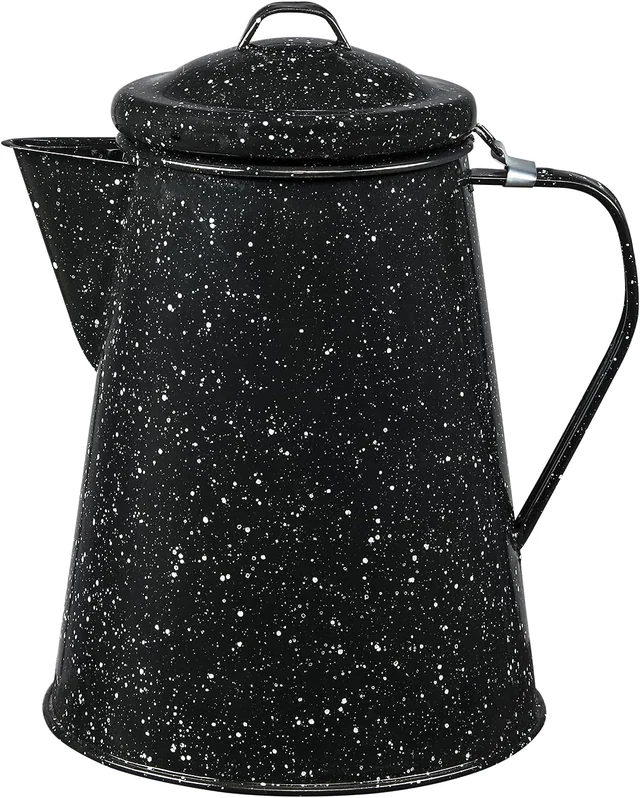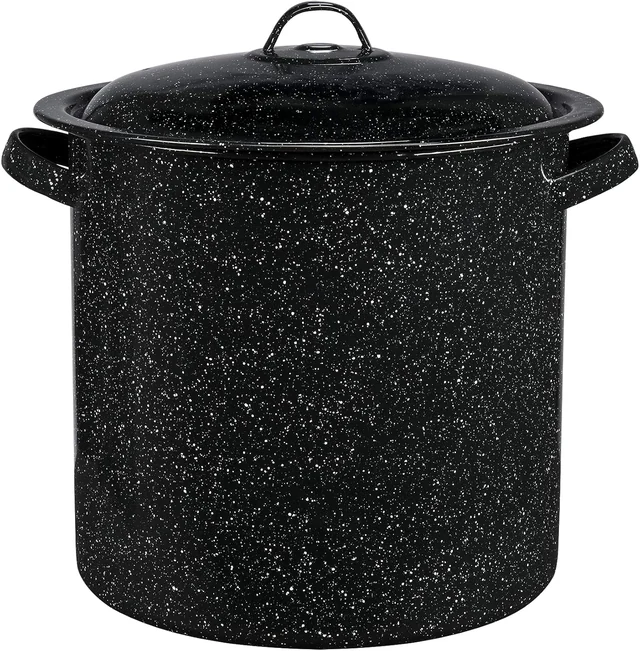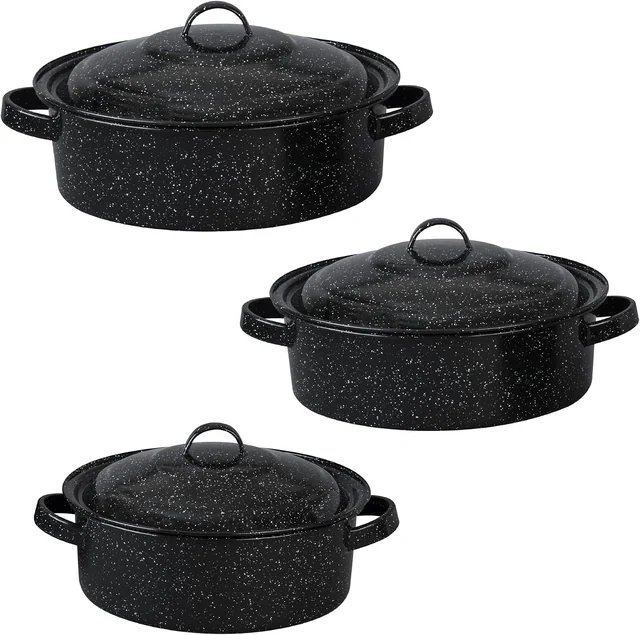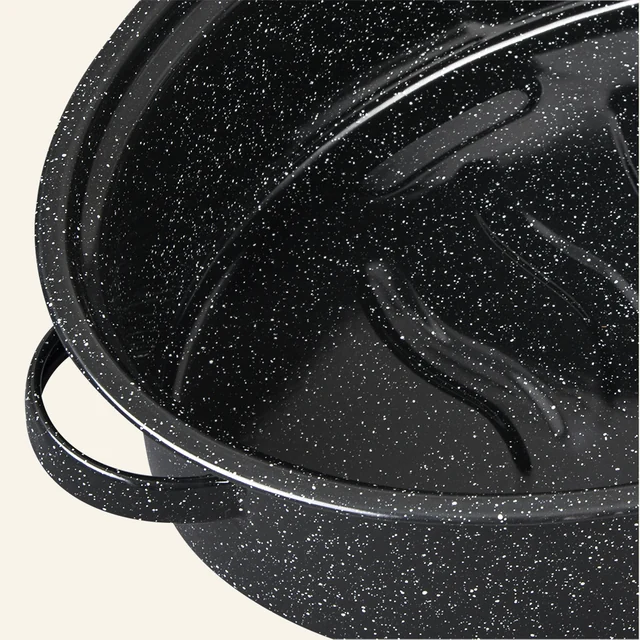
Make the cookware fit your everyday routine
The best care routine for Granite Ware starts before washing. Choose a piece that fits your stove, the quantity you cook, your sink, and the shelf where it will live. When those details work together, the cookware is easier to use thoughtfully. When they do not, even a simple dinner can leave you wrestling with a large vessel in a crowded kitchen.
Enamel-on-steel cookware has its own construction and instructions. Do not borrow a seasoning routine from bare cast iron or a cleaning shortcut from a stainless-steel pan simply because the shapes look familiar. Identify the exact item, read the supplied directions, and keep them with your purchase record. That gives you a clear reference when a question arises later.
This guide brings together practical selection, use, cleaning, inspection, and storage decisions. It does not promise that one cleaning treatment will fix every mark or that every Granite Ware item shares the same heat-source approval. The pots and pans collection is a useful starting point for comparing tasks and capacities. For a dedicated oven vessel, see our roaster selection guide instead.
Read the construction, not just the finish
The speckles are a visual feature, not a complete material description. A cookware name containing the word granite can refer to different products in the wider market. For Granite Ware enamelware, look for the specific enamel-on-steel construction in the product information. That identifies a metal body with an enamel surface rather than a stone vessel.
The current manufacturer's 21 QT stockpot page, for example, identifies steel construction and Mexican origin. Its directions specify washing before use, avoiding empty overheating and impacts, using hand protection, and cooling before cleaning. They also exclude glass cooktops. Those details describe that particular model, not a blanket approval or restriction for every product sharing a finish.
A material comparison becomes useful when it leads to a question about your routine. If you usually follow recipes that start with an empty preheated vessel, check whether that method suits the cookware. If you rely on a dishwasher, verify the cleaning instructions for both the body and its accessories. If induction is essential, obtain an explicit model-specific statement rather than inferring compatibility from the color or appearance.
Keep product terms precise in your notes. Write enamel-on-steel, enameled cast iron, stainless steel, or the actual construction stated by the maker. That small distinction helps when searching for care advice and prevents instructions for a different pan from quietly becoming part of your routine.
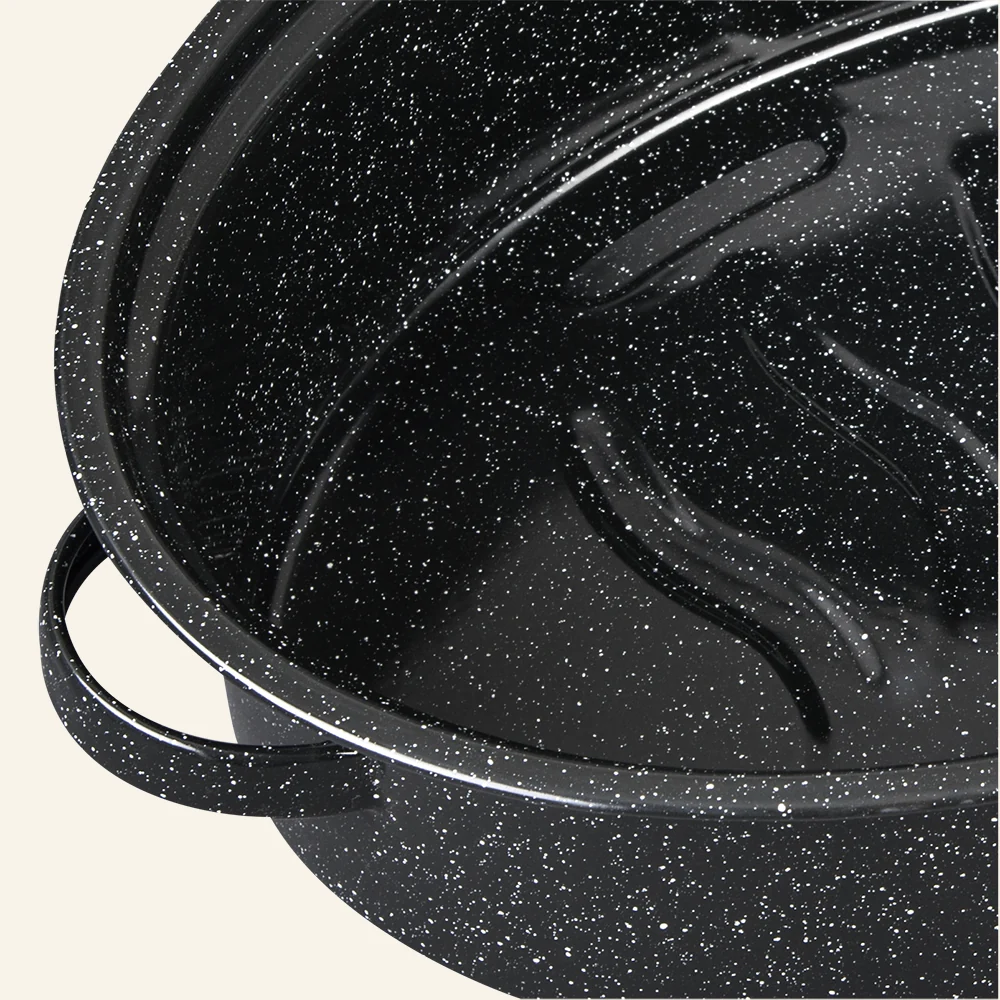
Choose a pot by the job it will do
Begin with a list of meals you make regularly. Perhaps you need a vessel for a family soup, a smaller pot for side dishes, or a larger stockpot for occasional gatherings. Put those tasks in order of frequency. A purchase that makes the weekly meal easier may be more useful than a large piece chosen for an event that rarely happens.
Describe the task in concrete terms: the quantity, the utensils you use, whether you need a cover, and how you serve the finished dish. Then compare product dimensions and stated capacity. A capacity number alone does not explain how comfortable the pot will be to reach into, wash, or store.
Keep cooking separate from preserving. A stockpot used for dinner is not automatically a complete canning setup, even if jars appear to fit inside. Shelf-stable preservation depends on the correct equipment and tested method. Our water-bath canning guide explains that separate decision before you shop for a canner or rack.
| Main task | Useful product question | Detail to compare |
|---|---|---|
| Regular soup or broth | Is the size comfortable for the usual batch? | Stated capacity, height, and handle arrangement |
| Side dishes | Will the vessel be convenient among other pans? | Overall footprint and cover |
| Larger gatherings | Can the complete setup be handled and stored? | Dimensions, instructions, sink, and shelf space |
| Oven meals | Is the exact piece intended for the method? | Oven directions and included cover |
| Home preservation | Is this the equipment the tested recipe requires? | Canner, rack, jar arrangement, and compatible heat source |
Think beyond the number on the label
Two pots with the same nominal capacity can feel different in a kitchen. One may be taller and narrower, while another occupies more of the stove. Their handles can change the overall width, and their lids can create different storage needs. Compare the complete dimensions rather than treating capacity as the only meaningful measurement.
Measure the available space around the burner, including nearby controls and other cookware. Check the appliance instructions for the permitted vessel size and intended use. A pot that sits comfortably on an unused stove may interfere with another pan when dinner is underway. Rehearse the usual arrangement with cool cookware before deciding what size you need.
Your sink deserves the same attention. Can you place the pot inside without striking the faucet or pressing its rim against another hard item? Is there room to turn it carefully while washing? A large pot may fit the stove but make cleanup awkward. Knowing that in advance lets you choose a better size or prepare a suitable washing arrangement.
Storage openings can be narrower than the shelf behind them. Measure the cupboard doorway as well as the interior, and include the cover in your plan. If the only available location requires balancing several heavy objects above the pot, rethink the arrangement before adding another piece. Daily convenience often comes from a better fit rather than a larger collection.
Compare cookware without turning it into a contest
Different materials and forms serve different cooking routines. A useful comparison asks what the specific item permits and what work it creates for you. It does not require calling one material universally healthier, stronger, or more professional. Claims of that kind often skip the details that actually determine whether a pan suits a household.
For each candidate, collect the same information: construction, dimensions, included components, heat-source directions, care, and price. If one product page is vague, do not fill the gap with information from a similar-looking item. Ask about the exact model. A comparison table is most helpful when every row means the same thing for each candidate.
Separate preferences from requirements. A preferred color may be flexible, while the stove's compatibility limits are not. A particular handle shape may feel convenient, but it cannot compensate for a pan that does not fit the oven or cabinet. Put the essential conditions first so a photograph does not decide the purchase for you.
| Comparison area | Requirement or preference? | Useful evidence |
|---|---|---|
| Supported heat source | Requirement | Exact product and appliance instructions |
| Capacity and fit | Requirement | Actual dimensions and intended task |
| Cleaning method | Often a practical requirement | Directions for body, lid, and accessories |
| Storage arrangement | Practical requirement | A measured, accessible location |
| Appearance | Preference | Accurate photographs of the selected finish |
| Extra pieces | Depends on the task | An explicit contents list |
Give a new piece a careful first inspection
Unpack new cookware in a clear space and identify every included component. Keep the packaging until you have checked the item and read the instructions. Compare what arrived with the contents list, then look at the body, rim, handles, and cover. If something appears damaged or incomplete, resolve that before cooking.
Photograph the product identification and retain the receipt. A saved model reference is more dependable than remembering that you bought the medium black pot. Keep the care instructions in the same folder so you can find the correct information without repeating a broad internet search each time.
Follow the maker's first-wash directions. The purpose of this stage is to prepare the actual cookware, not to apply a treatment borrowed from another material. Do not add a seasoning procedure, surface polish, or coating unless it is specified for the product. If you are unsure about a suggested online treatment, ask the manufacturer before trying it.
Choose a familiar meal for the first use and keep the quantity manageable. You will learn more about the fit of the pot, access to its contents, and the placement of its cover when the recipe itself is already familiar. Record any practical adjustment you want to make next time. That is a useful household note, not a laboratory test or proof that every item performs the same way.
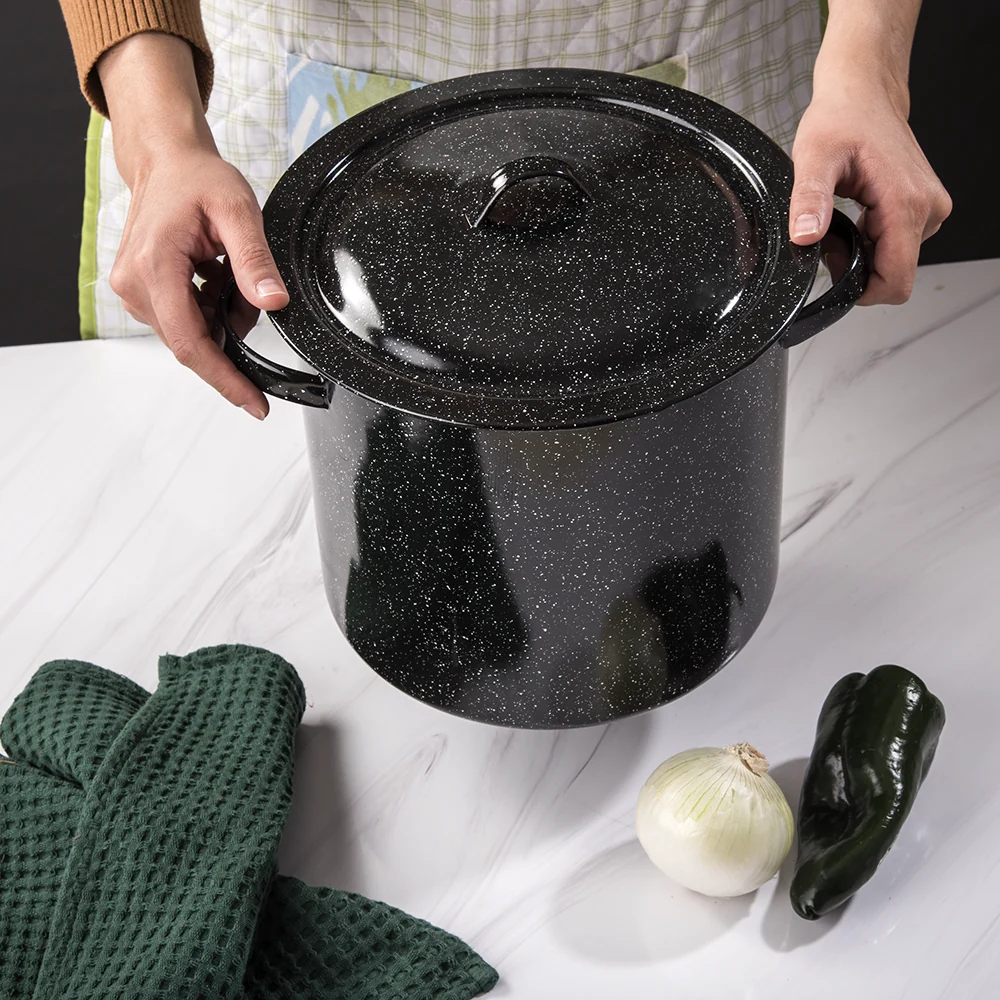
Prepare the work area as part of using the pot
Set out the tools you expect to use before heating begins. Check that the utensil can reach comfortably into the vessel and that there is a place to rest it. Put the cover's landing spot nearby. This prevents the familiar scramble for an empty corner of the counter while holding a hot lid.
Follow the cookware's instructions on heating, fill limits, lifting, and cooling. A capacity figure is not an instruction to fill the vessel to the rim or to lift it while full. Read any handling limits supplied with the exact product. If the directions are unclear, obtain an answer before using a large quantity that will be difficult to manage.
Arrange the finished-food step in advance. You may want to portion soup into serving bowls or transfer a dish to appropriate storage containers rather than carrying a large pot across the kitchen. Decide where those containers will stand and which utensil you will use. The cookware's usefulness includes how comfortably it fits the end of the task.
If several people share the kitchen, tell them which pieces are hot and where they will be placed. Keep hand protection close to the stove, and keep the route to the landing area clear. A tidy workflow is not a decorative ideal. It gives you room to follow the actual handling instructions without moving unrelated objects at the same time.
Make routine washing the easy option
Read the cleaning directions for the exact cookware and its separate components. A statement about the pot body does not necessarily describe a glass cover, a wire rack, or the handles of a tool supplied in a kit. When instructions differ, keep those pieces separate in your cleanup plan.
For the manufacturer's stockpot example, the specified routine uses warm water, dish soap, and a soft sponge, with soaking for stubborn residue. It calls for cooling before cleaning and avoiding abrasive materials. Follow that simple starting point rather than reaching immediately for the most aggressive pad in the cupboard. The model's care directions remain the reference.
Give the pan room in the sink. Remove knives and other hard objects that might knock against it while you work. Keep the cover where it will not slip into the vessel unexpectedly. A clear washing area makes it easier to use controlled movements and to inspect the surface afterwards.
Make drying part of the routine rather than an optional final step. Follow the product instructions, then choose a storage position where components are not put away wet against one another. If cleanup is shared, leave a short note about any piece that still needs attention. That is more reliable than assuming the next person knows whether a pan has been washed or merely left to soak.
Describe the problem before choosing a treatment
Not every visible mark calls for the same response. Food residue, a loose deposit, a persistent stain, and a damaged surface are different situations. Before trying another cleaner, look closely at the cool, washed cookware and describe what you can actually see. Does material lift away, or does the surface itself look changed?
Avoid scraping harder simply because a first wash did not remove the mark. Check the maker's instructions for the next permitted step. If no suitable method is specified, ask for guidance with a clear photograph and the model number. A description such as a rough area near the rim is more useful than saying the pot looks wrong.
Do not mix household cleaners or assume that a popular homemade paste is appropriate for every enamel finish. A recipe for cleaning one material may be unsuitable for another. Keep chemical products in their labelled containers and follow their directions as well as the cookware maker's restrictions. An unidentified cleaner in a reused bottle is not a useful experiment.
| What you notice | A sensible next action | Avoid |
|---|---|---|
| Remaining food residue | Repeat the permitted wash or soak method | Escalating immediately to scraping |
| A mark you cannot identify | Inspect and consult the product instructions | Calling it harmless without checking |
| A chipped or visibly altered area | Set the item aside and ask the maker about continued use | Painting or covering the food-contact surface |
| A loose handle or poor cover fit | Resolve the mechanical issue before use | Treating it as a cosmetic problem |
Use a clean, dry inspection to make decisions
Inspect cookware when you can see it clearly. Food, water, and reflections can hide a small defect or make a normal feature look alarming. Place the cool, clean piece in good light and examine the area that concerns you. Look at it from more than one angle without pressing or scraping at the surface.
Take two kinds of photographs if you need help: one showing the entire item and one showing the specific area. Include the product identification and explain when you noticed the issue. Keep the description factual. The maker can assess a clearly documented concern more easily than a guess about how the defect happened.
For a concern involving the food-contact surface or a structural component, set the piece aside until you have an appropriate answer. Do not apply household paint, adhesive, or an improvised patch to restore a cooking surface. A repair that looks neat is not evidence that the item is suitable for food preparation.
Separate the condition decision from the sentimental one. A well-loved family pan may have a place as a display object even if its suitability for cooking is uncertain. Keeping an old item does not require continuing to cook in it. If you choose to retire it, identify a replacement by the task and dimensions that made the old piece useful, rather than trying to reproduce every detail of its appearance.

Give the body, cover, and tools a stable place
Storage should make it easy to take out one piece without moving an unstable tower. Put frequently used cookware in an accessible location, and reserve less convenient space for occasional pieces. A large stockpot that requires a complicated rearrangement every week may belong on a different shelf even if it technically fits the original cupboard.
Keep the cover with its matching body in a way that does not create repeated knocks. If you separate lids, label or organize the spaces so the correct pairing remains clear. Similar-looking covers are not necessarily interchangeable. The right fit matters more than creating a perfectly uniform row on the shelf.
If you nest compatible pieces, follow the makers' guidance and use a protective arrangement that avoids hard contact and trapped moisture. Do not force one piece into another because the sizes seem close. Check that handles can be grasped without dragging the inner vessel across the rim. Stable storage is easier to maintain when it does not depend on a precise balancing act.
| Storage situation | Practical arrangement | Check again when... |
|---|---|---|
| Daily pot | Accessible shelf with a known cover location | Your usual menu changes |
| Large seasonal piece | Clear space with an easy lifting route | Another item is stored above it |
| Canner and rack | Identifiable matching components, completely dry | The next preserving season begins |
| Small kit tools | A labelled container with instructions nearby | A part is borrowed for another task |
Build a small collection around distinct jobs
Several pieces earn their place when each solves a different problem. A regular cooking pot, an oven roaster, and a water-bath canner can support separate tasks. Several nearly identical vessels may simply compete for the same shelf. Review the jobs first, then decide whether a missing size would make the routine easier.
Write down what your existing cookware does well. Perhaps the current soup pot is a comfortable size, but its cover is difficult to store. A storage change might solve the issue without another purchase. Perhaps your oven pan is too long for a new appliance. That is a dimensions problem that a replacement can address directly.
When considering a set, assess each piece individually. A low price per item is less useful if several pieces duplicate what you already have. Read the contents carefully, especially whether lids count toward the total. Compare the set with the cost and convenience of buying only the piece that is missing.
There is also value in a consistent record. Keep a simple list of model names, capacities, supported heat sources, and care directions. It can be a note on your phone rather than a formal inventory. When someone else cooks in your kitchen, that list helps explain which vessel belongs to which job without relying on visual guesswork.
Understand what a document actually establishes
Materials claims, care instructions, warranty terms, and certification records answer different questions. Read the title and scope before treating one as proof of another. A document that describes manufacturing materials does not necessarily certify every finished product, and a care instruction does not establish a health claim.
The manufacturer publishes a California AB1200 disclosure for porcelainized steel products, with a separate portion addressing speckled black enamel. This is a materials disclosure. It should not be described as a blanket cookware certification or converted into a promise that a product contains no chemicals. Use the original document when that information matters to your purchase.
Warranty language also needs an exact match. A historic document for an older product may name a former supplier or different terms. Keep the documentation supplied with your item and the receipt from the purchase. When asking about coverage, provide the model and the relevant problem rather than quoting a general claim found on an unrelated page.
For ordinary shopping, a short evidence folder is enough: product information, instructions, receipt, and any response to a compatibility question. You do not need to collect every page that mentions the brand. The useful record is the one that helps you use and maintain the exact piece in your kitchen.
Put the routine into practice for a week
Choose one frequently used piece and follow its whole journey through a meal: storage, preparation, cooking, serving, washing, drying, and return to the shelf. Notice the moments that feel awkward. Perhaps the cover has no clear landing spot, the utensil is too short, or a drying rack blocks the only comfortable place to turn the pot.
Change one practical detail at a time. Move the lid rest, clear a different shelf, or put the instructions where they can be found. After the next meal, decide whether that change solved the problem. This approach is more informative than replacing several things at once and trying to guess which purchase helped.
Make your next cookware choice from that experience. Compare the Granite Ware pots and pans by the jobs they would do in your actual kitchen. Use the roaster range for oven-focused meals and the canning range for a properly planned preserving setup. A piece that fits its task, comes with clear instructions, and has a stable place to live is easier to look after every time you use it.